Sing Aloud Font: Elevating Small Business Branding
I still remember the exact moment I realized my candle business had a typography problem. I was standing at a local craft market, watching potential customers pick up my jars, read the label for a split second, and then set them back down. The product smelled amazing, and the wax was perfectly poured, but something about the presentation felt off. It wasn't until a fellow vendor mentioned that my labels looked "a bit generic" that it clicked. I was using a standard system font that everyone else was using. My brand didn't have a voice; it just had text. That weekend, I went on a hunt for a typeface that could actually sing, and that is when I discovered Sing Aloud by Creativeqube.
Finding a Voice Through Handcrafted Typography
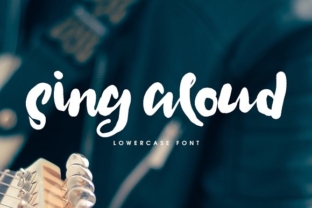
As small business owners, we often pour our hearts into product development while treating design as an afterthought. But in a saturated market, your visual identity is usually your first handshake with a customer. Sing Aloud isn't just another script font; it is a handcrafted typeface that carries genuine warmth and personality. When I first tested it on my digital mockups, the difference was immediate. Unlike stiff, automated scripts that feel robotic, Sing Aloud has a natural flow that mimics real handwriting without sacrificing legibility.
This specific style falls into the Script Amp category, meaning it offers more expressive flair than a standard cursive font but remains grounded enough for commercial use. For my candle line, which focuses on cozy, nostalgic scents, this font bridged the gap between artisanal charm and professional polish. It transformed my packaging from looking like a DIY project to appearing as a curated boutique brand. The mood of the font is joyful yet sophisticated, making it incredibly versatile for businesses that want to feel approachable but premium.
Practical Applications Across Business Touchpoints
The true test of any display font is how well it performs across different mediums. A font might look stunning on a large website banner but fail miserably on a two-inch sticker. In my experience integrating Sing Aloud into my business operations, I found it excels in specific areas where emotional connection matters most.
- Product Packaging and Labels: This is where Sing Aloud truly shines. On my candle jars, I used the font for the scent name (e.g., "Vanilla & Sage") rather than the entire label. The organic curves soften the industrial look of the glass jar and signal to the customer that this is a handmade, thoughtful product.
- Thank-You Cards and Inserts: Unboxing experiences are critical for e-commerce retention. Printing "Thank You for Supporting Small Business" in Sing Aloud makes the note feel personal, even if it is printed in bulk. It adds a human touch that standard serif or sans serif fonts simply cannot convey.
- Social Media Graphics: Consistency on Instagram and Pinterest builds recognition. I created templates where Sing Aloud serves as the headline font for quotes, new product drops, and behind-the-scenes reels. Because the font has unique character shapes, it stops the scroll better than generic bold text.
- Logo Design and Wordmarks: If you are in the early stages of branding, this typeface works beautifully for logotypes. It provides a custom-lettered look without the expense of hiring a lettering artist. Just be sure to tweak the spacing slightly to make it uniquely yours.
Balancing Personality with Professional Readability
One common mistake entrepreneurs make with creative fonts is overusing them. Sing Aloud is a powerful tool, but it demands restraint to maintain professionalism. Through trial and error, I learned that this font is best utilized as a headline or accent element rather than body copy. When designing my website banners, I initially tried to use it for product descriptions, but the intricate ligatures made reading difficult on mobile screens.
The solution lies in strategic font pairing. To create a cohesive brand identity, pair Sing Aloud with a clean, modern sans serif or a minimalist serif font for your detailed information. For example, on my packaging, the scent name uses Sing Aloud to evoke emotion, while the safety warnings, ingredients, and burn instructions are set in a simple geometric sans serif. This contrast not only improves readability but also makes the decorative elements pop. The clean supporting font acts as a frame, allowing the handcrafted beauty of Sing Aloud to take center stage without overwhelming the viewer.
Readability also depends on scale and context. On social media thumbnails, keep the text short—three to five words maximum. Long phrases in script fonts can become tangled and hard to decipher at small sizes. For printed materials like menus or flyers, ensure there is ample whitespace around the lettering. Crowding a decorative font against other design elements creates visual clutter that cheapens the perceived value of your product. Letting Sing Aloud breathe gives it the elegance it deserves.
Technical Considerations for Commercial Success
Before you commit to using Sing Aloud for your next big launch, it is vital to understand the technical assets included with the font. Creativeqube typically includes multiple file formats, such as OTF and TTF, ensuring compatibility with everything from Adobe Illustrator to Canva and Cricut Design Space. As a business owner, verifying that your design software supports the specific file type saves hours of frustration during production.
Pay close attention to the OpenType features. Many premium script fonts include alternate characters, swashes, and ligatures that allow you to customize the look. Using these alternates prevents repetitive letter shapes in longer words, maintaining the illusion of natural handwriting. For instance, if your brand name has two 'o's side-by-side, swapping one for an alternate version creates a more balanced, custom aesthetic. These small details are what separate amateur designs from professional brand identities.
Equally important is understanding licensing. Always verify that you have the appropriate commercial license for your intended use. While personal licenses are great for hobby projects, selling products with Sing Aloud on the packaging or using it in client work requires a commercial license. Respecting intellectual property protects your business legally and supports the designers who create these beautiful tools. Check whether the license covers physical products, digital downloads, or web embedding, as these categories often have different tiers.
Building Trust Through Visual Consistency
Ultimately, choosing a font like Sing Aloud is about more than aesthetics; it is about building trust. Customers associate high-quality typography with high-quality products. When your Instagram posts, website headers, packaging, and business cards all share a consistent typographic voice, you signal reliability and attention to detail. Since updating my branding with this handcrafted typeface, I have noticed that customers frequently comment on how "pretty" and "professional" my setup looks. They perceive the care put into the typography as a reflection of the care put into the candle itself.
Typography is a silent ambassador for your brand. It sets the tone before a customer ever reads your copy or smells your product. By selecting a typeface that aligns with your brand’s values—whether that is warmth, creativity, nostalgia, or joy—you create an emotional anchor that makes your business memorable. Sing Aloud offers that perfect blend of artistic expression and commercial viability, helping small businesses transform everyday materials into meaningful brand experiences. It turns a simple label into a story, and a basic post into an invitation, proving that the right font doesn't just display words; it amplifies your message.